The artist who invented the ink-and-yarn-on-canvas technique.
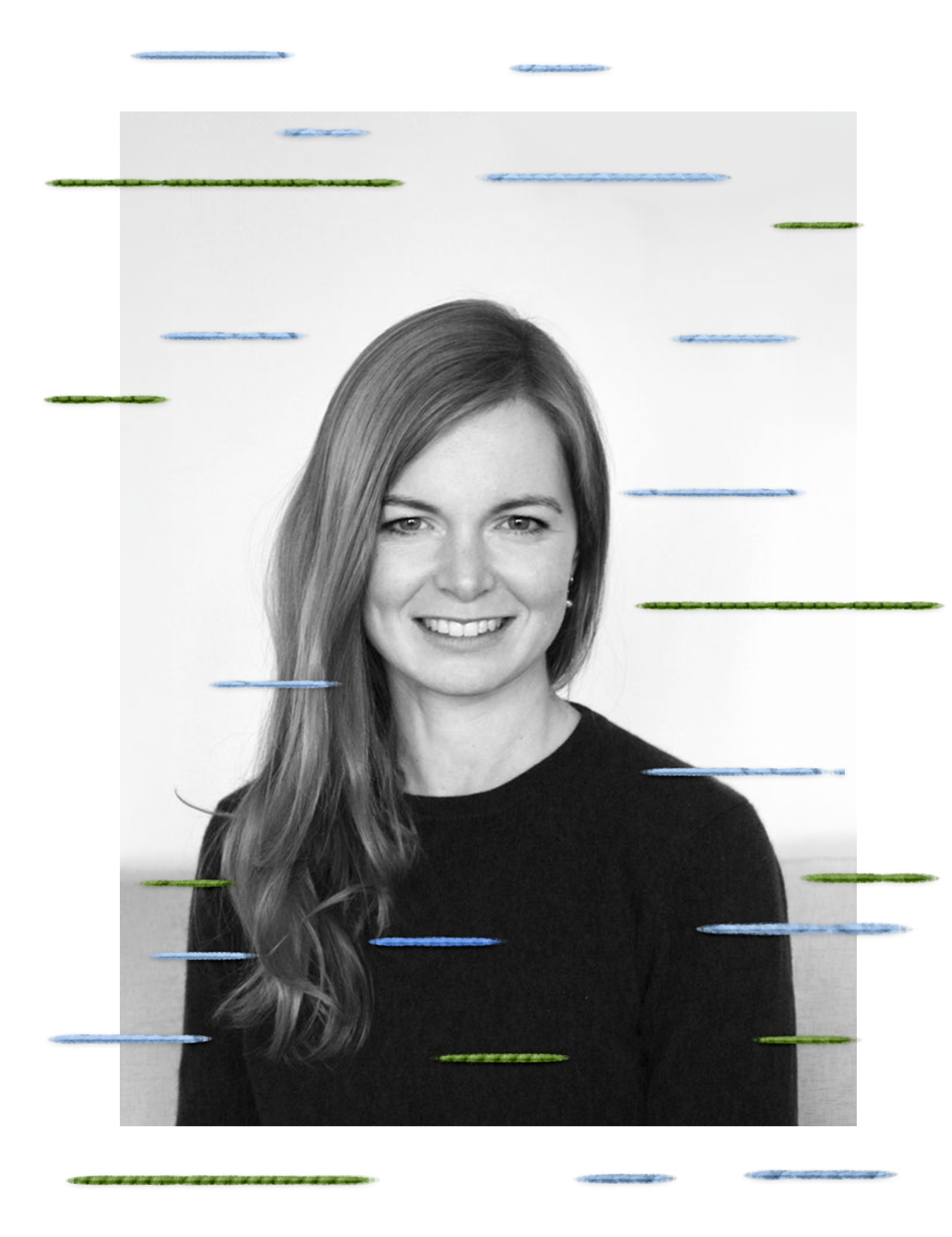
Linda Männel is a German textile artist based in Nuremberg. She spent years perfecting black-and-white ink painting before yarn changed everything. By layering embroidered thread over her ink drawings, she invented a technique entirely her own, one where the same painting reveals different images depending on the light, the hour, and where you stand. Her process is months-long, meditative, and unforgiving: the needle pierces the canvas once, and that is final. In this conversation, she speaks about reclaiming embroidery as a painterly act, the discipline behind independent practice, and what it means to make work that does not announce itself but stays with you long after you have walked away.
You stitch into drawings instead of simply drawing them. What does thread allow you to say that ink alone cannot?
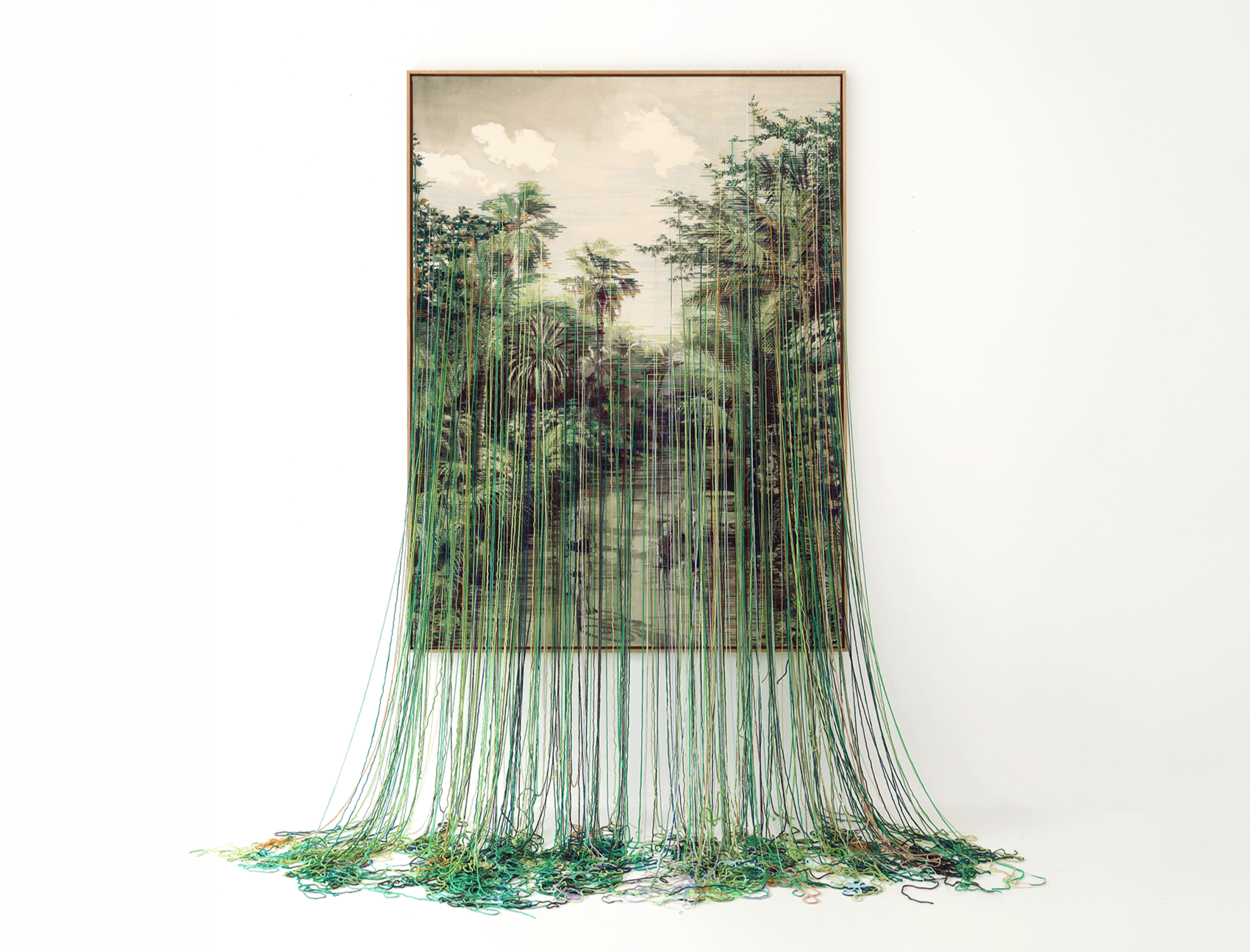
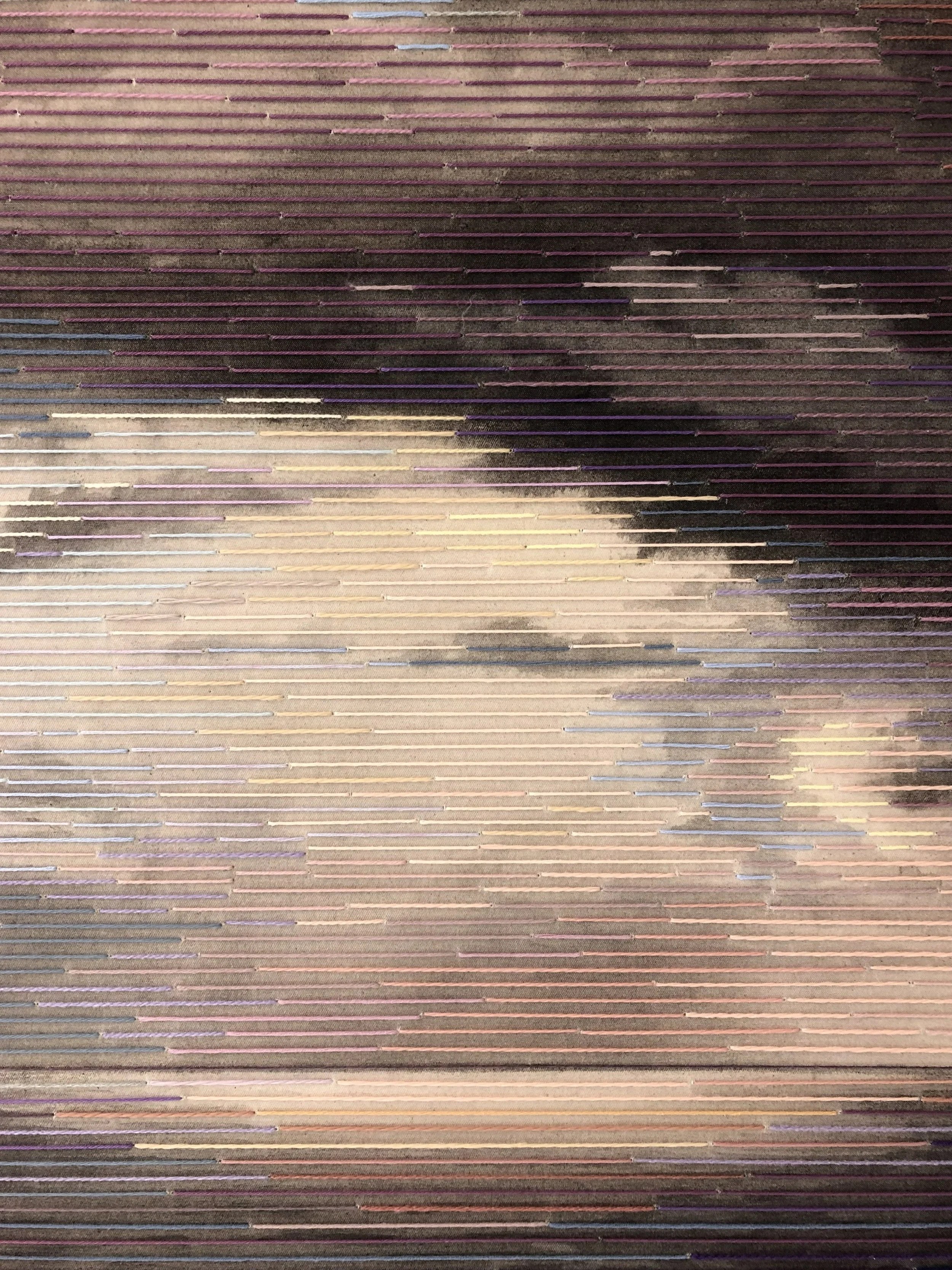
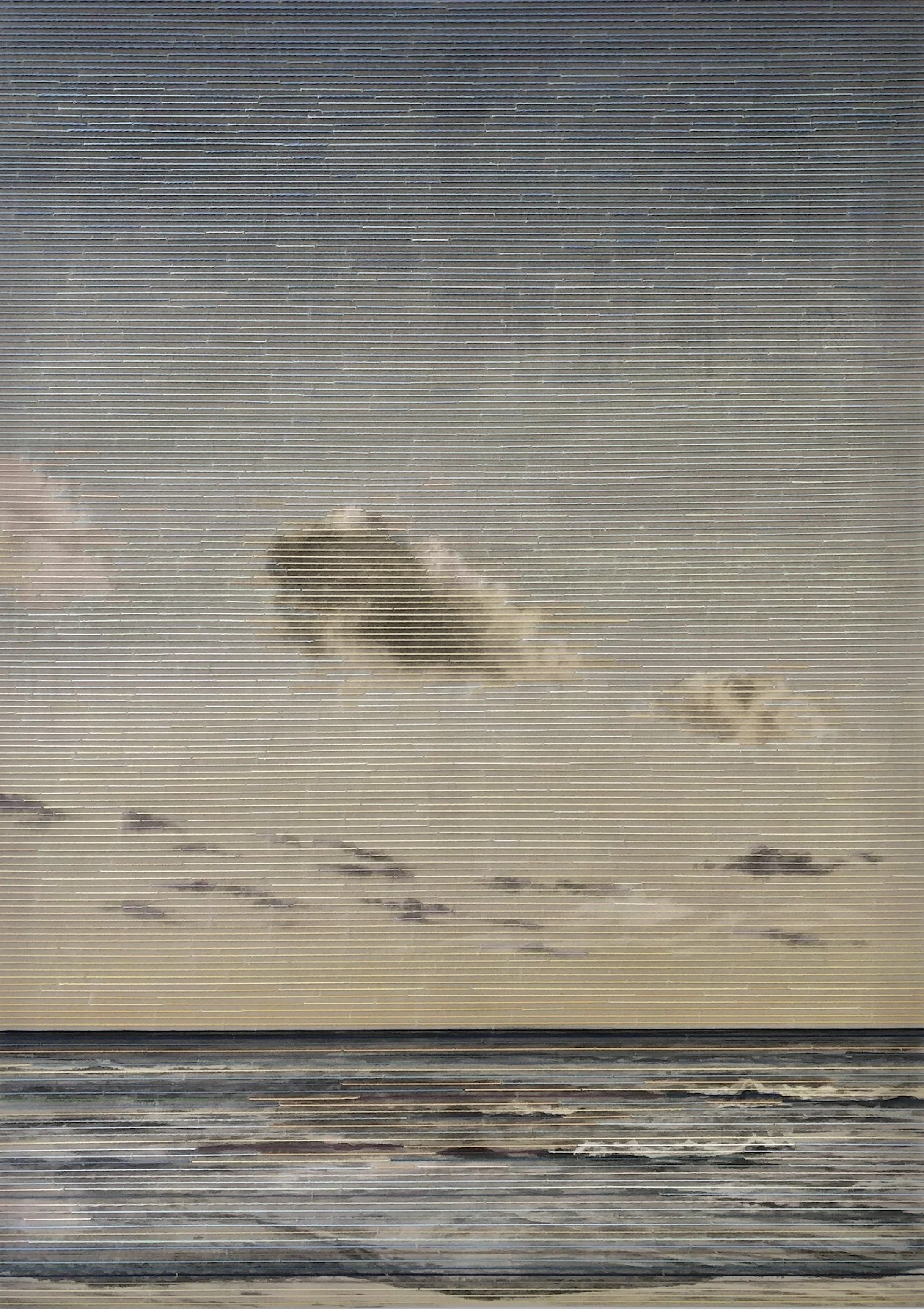
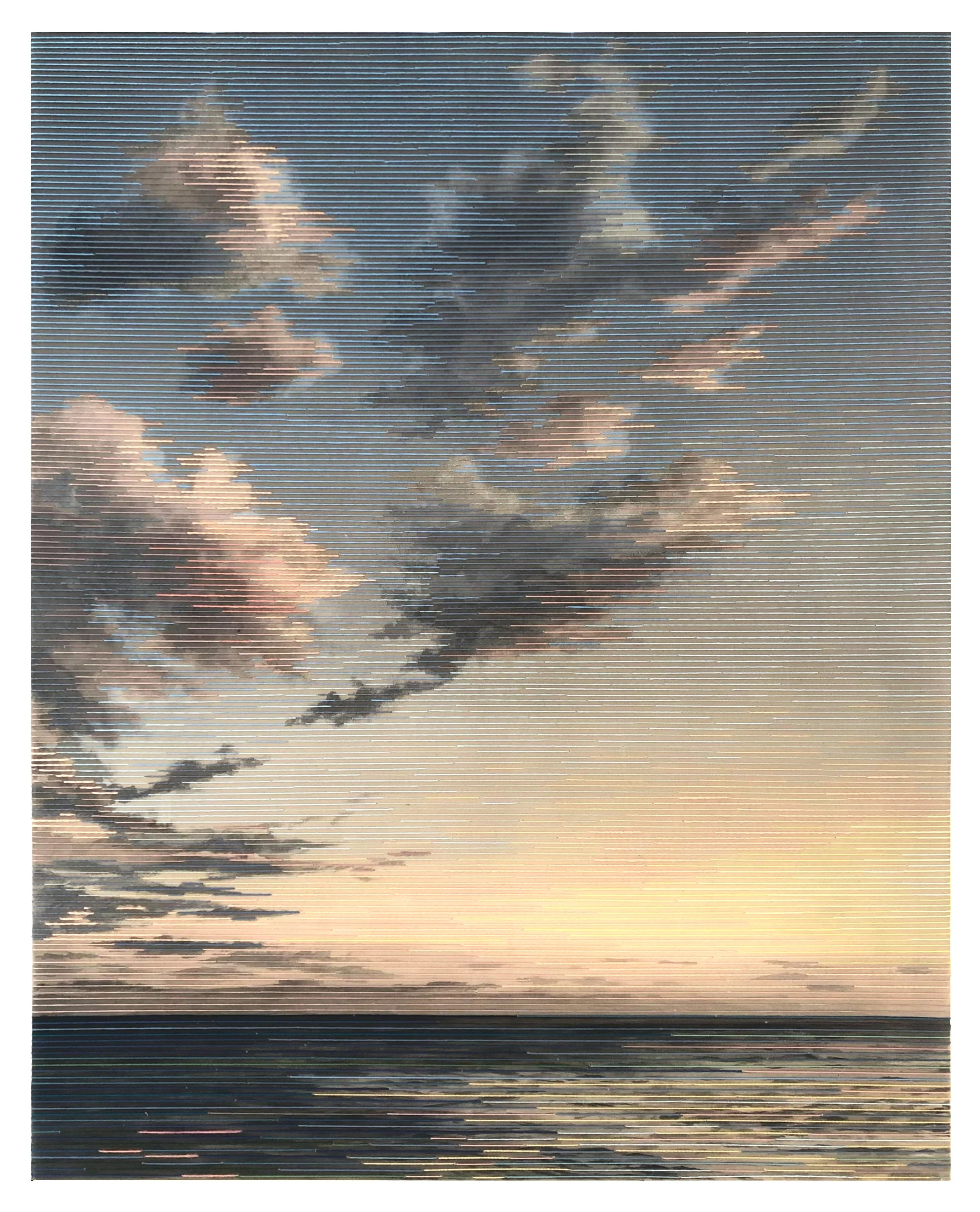
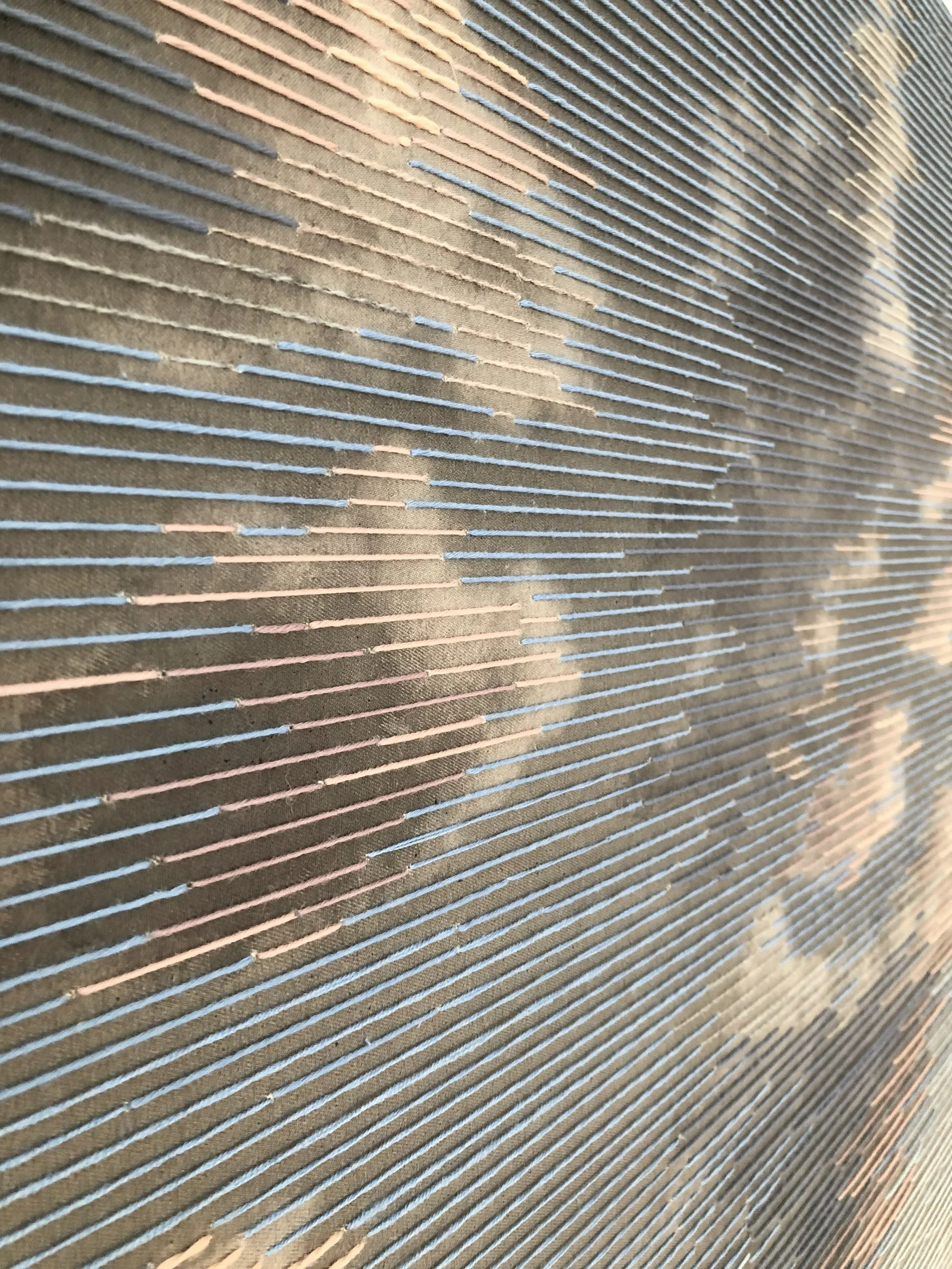
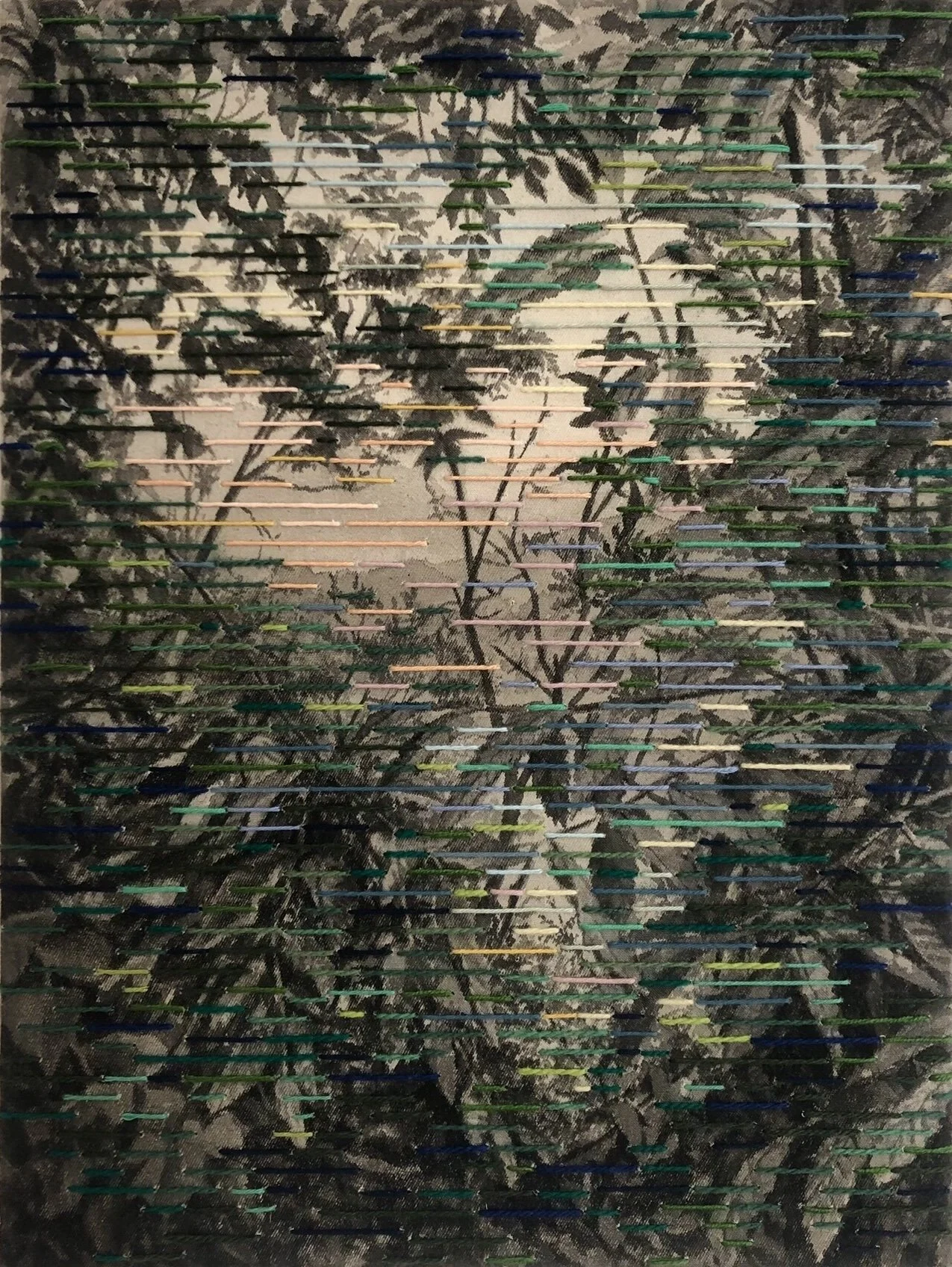
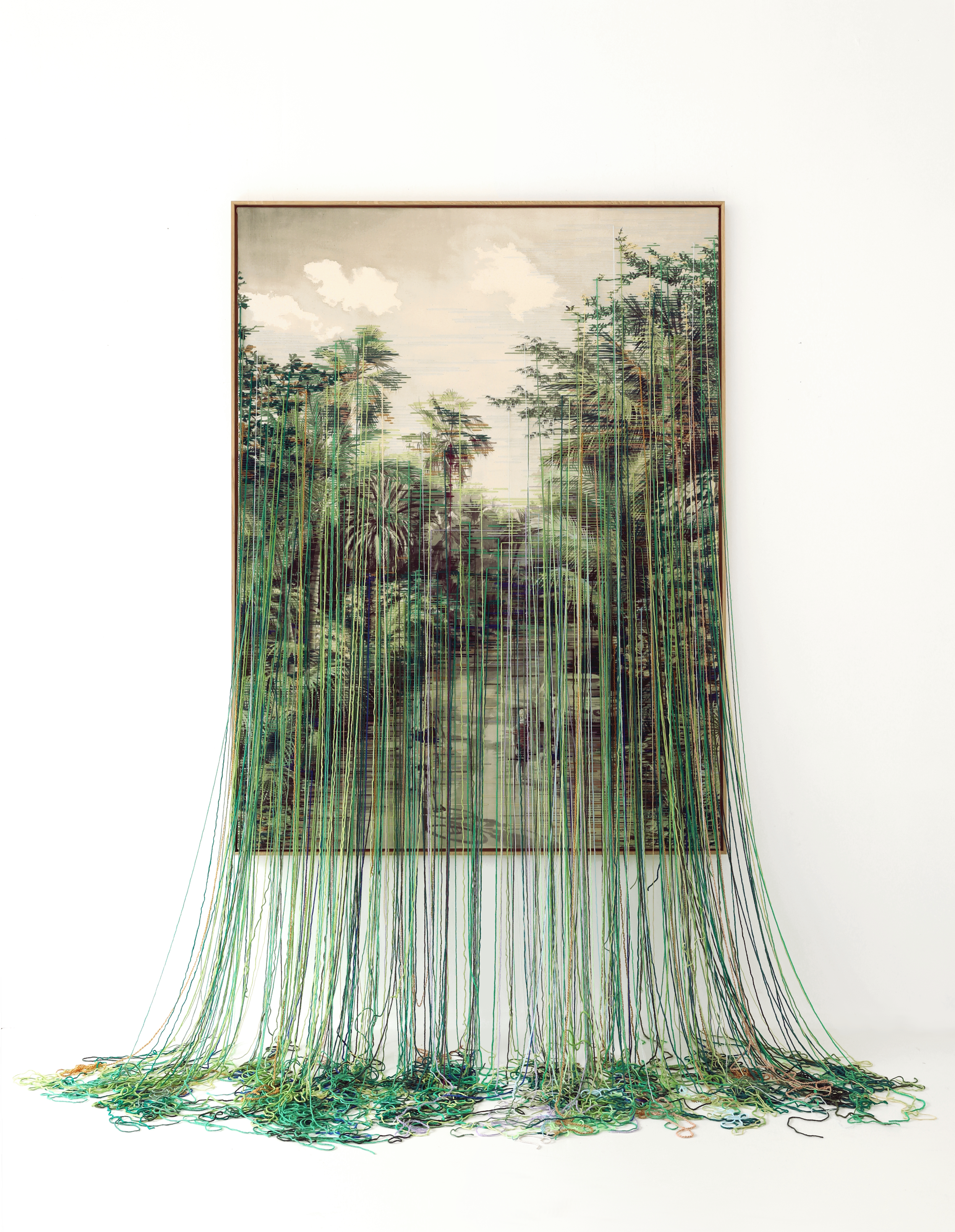
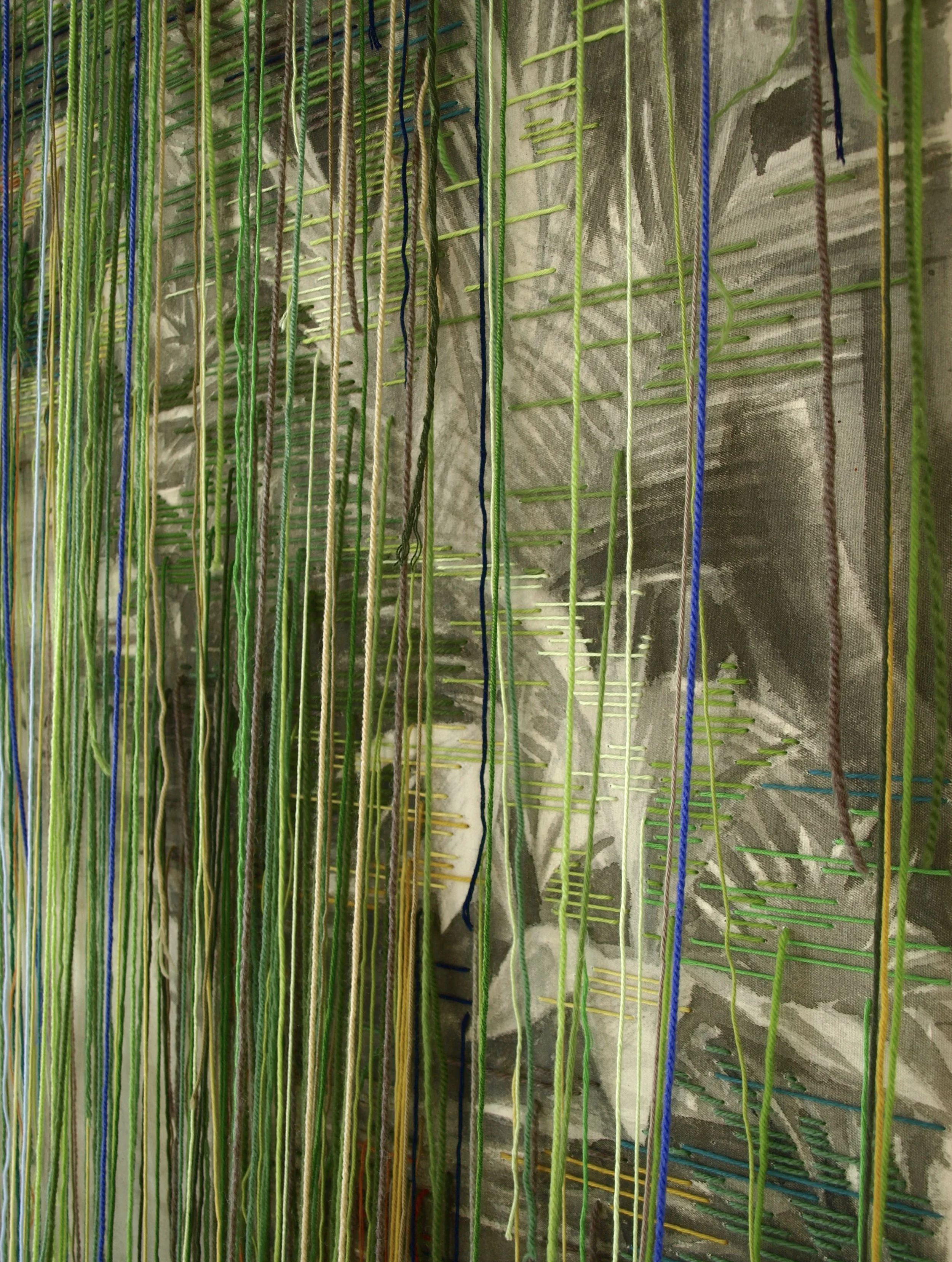
For many years, I “only” painted black-and-white pictures, perfecting my ink-painting technique and experimenting with different styles. Eventually, I became known as “the one with the ink.” Gradually, I felt a growing need for color, without wanting to give up my ink paintings. So I began coloring in my old works. First with watercolors, acrylics, and chalk, until I discovered yarn. I love this second, abstract layer, because depending on the time of day and the light, the painting shines through more or less—you see different images throughout the day and depending on the viewing angle.
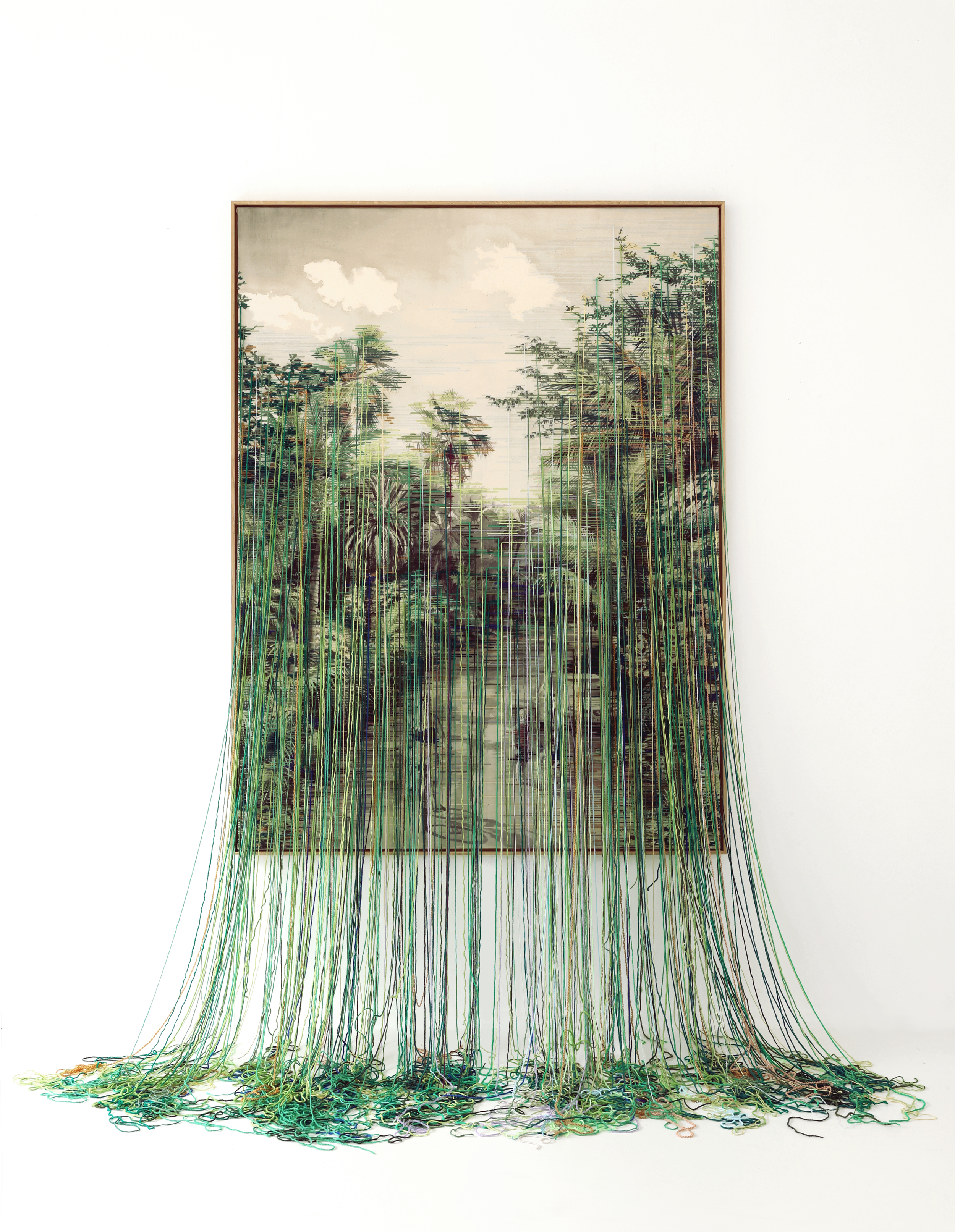
Yucatan II, 210 x 130 cm, ink/ yarn on canvas, 2023
A lot of contemporary art wants to announce its politics immediately. Your work feels more interested in atmosphere, memory, and silence. Was that a conscious rebellion?
I am personally drawn to art that can be sensed at first glance. It doesn’t have to reveal itself completely right away, but there must be something that can be experienced through the senses and that speaks to the viewer on multiple levels. My paintings emerge through a months-long process of painting and embroidery, which is a very meditative, repetitive act; I suspect that this concentration contributes to the sense of calm that the finished paintings radiate.
Your materials — ink, thread, canvas — are humble and domestic. Yet the emotional scale of the work feels monumental. Is that contrast intentional?
Many of my motifs stem from moments in nature that I have experienced very intensely. As a hypersensitive, highly emotional person, I absorb the scenery, its vibrations, and everything happening around me, storing it away for the moment when I begin a new piece. When I then create the black-and-white ink drawing, it serves as the “framework” for the embroidery. The moment I begin to fill this monochrome image with the color of the thread, to shape the light, something wonderful happens that still fascinates me with every picture, even after hundreds of them.
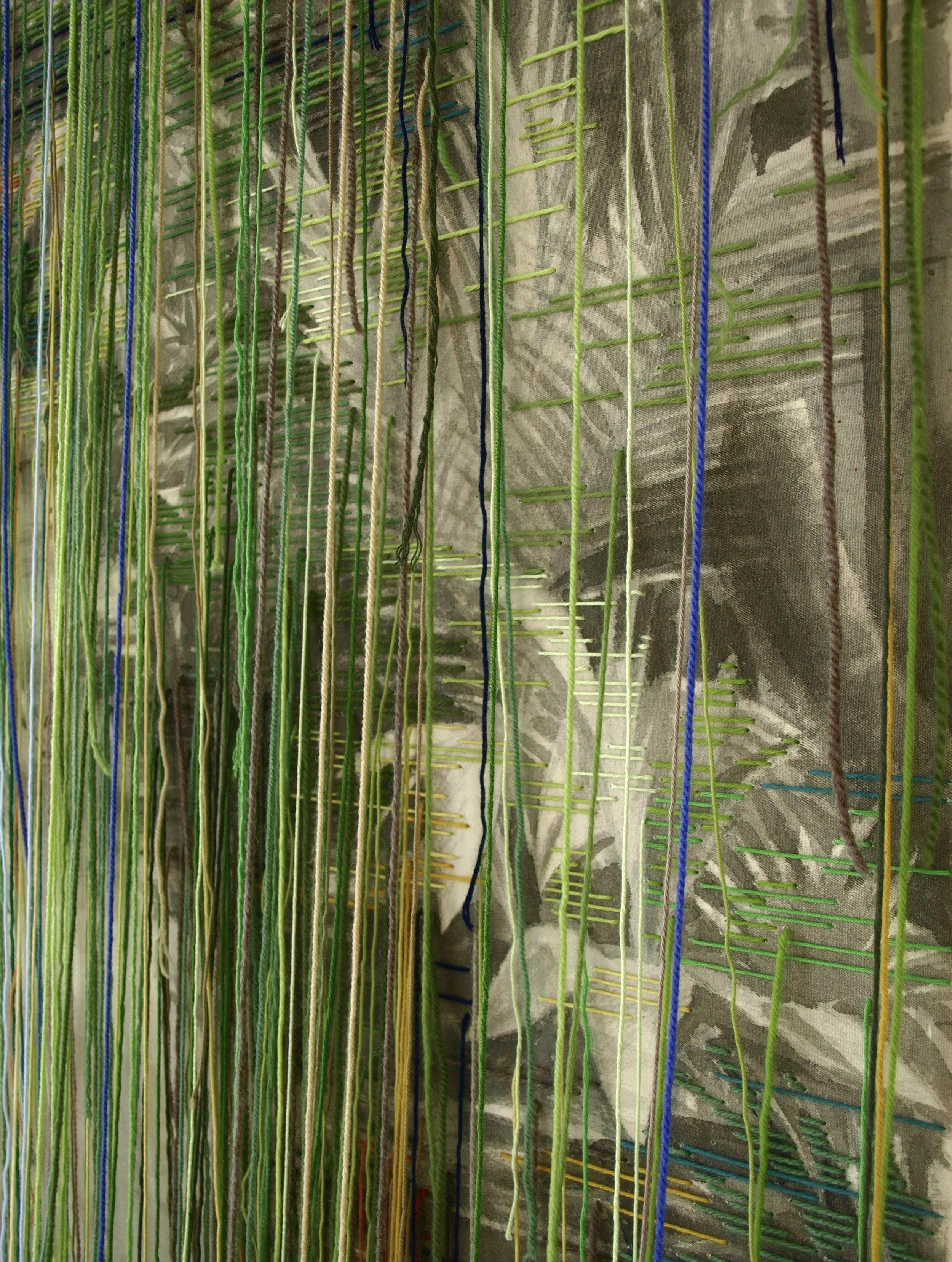
Yucatan, ink/yarn on canvas, 220 x 120 cm, 2017
What’s something the art world rewards that you personally distrust?
I'm not a fan of NFTs or AI-generated art.
When someone stands in front of your work, what do you hope happens first: thought, emotion, or confusion?
I think it's a mix of emotion and confusion.
What does repetition do to your mind after several hours in the studio?
I fall into a kind of time warp—the hours just melt away; I could go on forever and have to set an alarm to make myself stop. Since I pierce the canvas with the needle, a hole remains, around which the ink color chips away slightly, and this cannot be undone. So I only ever have one chance and have to work with great precision. When I get home, though, exhaustion sets in, and I realize just how much this intense concentration demands of me.
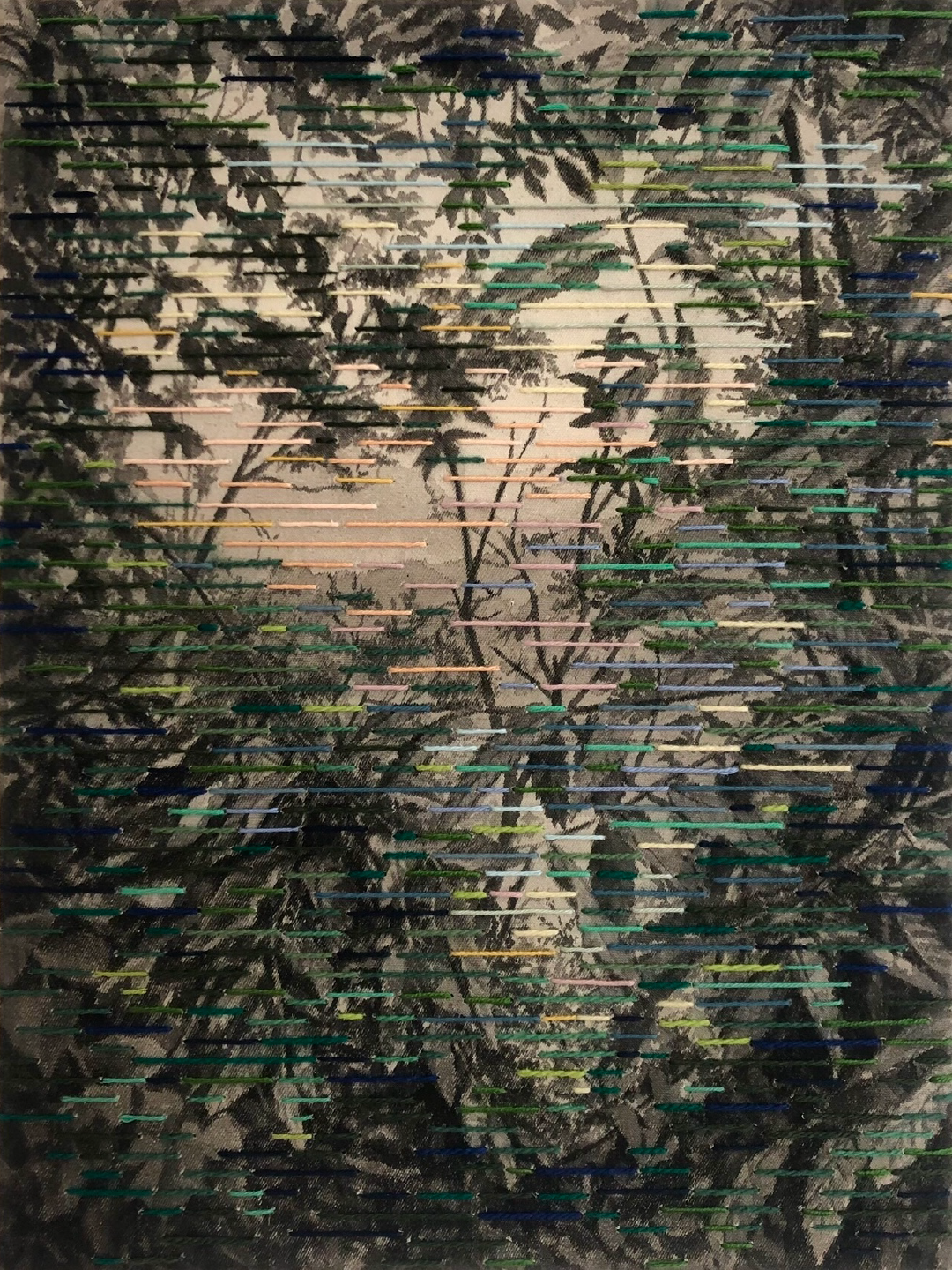
Salò, ink/yarn on canvas, 41 x 31 cm, 2025
People romanticize artistic freedom, but most serious artists seem incredibly disciplined. What does your routine actually look like?
“Very disciplined” is a spot-on description. Since I also have a personal life and children, my daily work routine is very precisely planned; I have detailed to-do lists for each day and plan well in advance to manage all my commissions, projects, and exhibitions. It’s been a very long time since I sat in my studio and indulged in the romantic artist’s life I knew from my student days. I do miss that very much, but being an independent artist means being an entrepreneur, with everything that entails—and that’s very unromantic!
Is talent overrated compared to endurance?
I think the two go hand in hand. When you feel deep down that you have a talent for something, it helps you stick with it and stay focused on your goals.
You’ve maintained a consistent visual language for years. How do you know when persistence becomes mastery — and when it becomes stagnation?
At first glance, my visual language may seem relatively consistent—but upon closer inspection, you’ll notice constant changes in the details. By focusing on a specific field of activity, a wide range of possibilities suddenly opens up, constantly inspiring me with new ideas and leaving so much more to explore. Every now and then I get tired of embroidery and long for techniques that yield faster results. Then I sew wall hangings or tuft tapestries, only to return to my embroidery with some longing after a while.
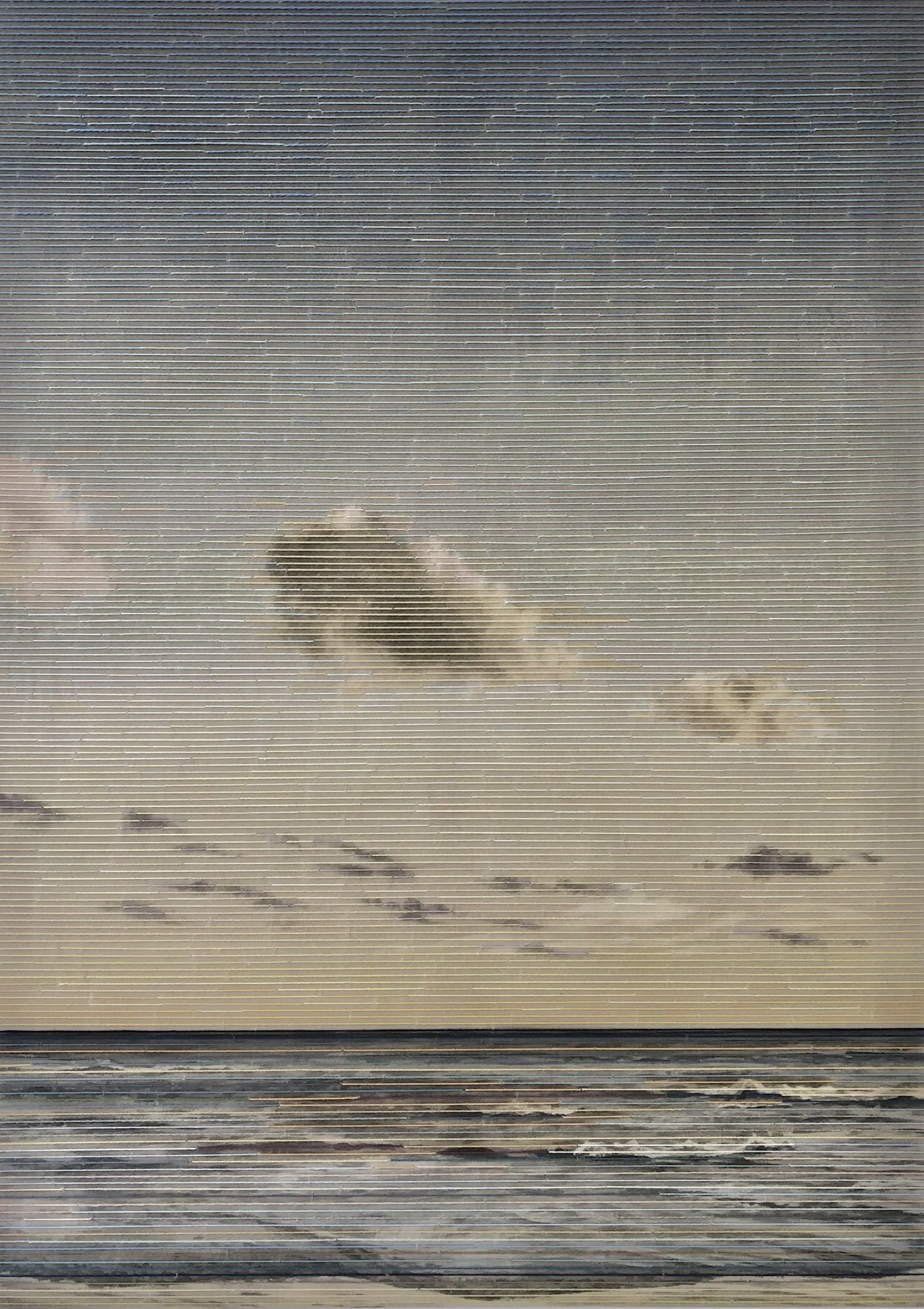
Dorada, ink/yarn on canvas, 140 x 100 cm, 2025
Do you think contemporary art has become too performative socially?
Many artists use their work less as a means of formal aesthetics and more as a moral statement or political activism. At times, these actions are overly theoretical, superficial, or provocative, and merely highlight social injustices rather than offering solutions. Fortunately, however, the visual arts are a very broad field, so one cannot generalize.
What’s the biggest misconception people have about textile-based work?
Textile art is often quickly labeled as “ethnic” or is burdened by the cliché of being a craft or a female pursuit. I employ an historical technique that women have preserved for hundreds of years—and to which they were often confined in their creative work. I find it fascinating to liberate this art from those narratives, using embroidery more as a painterly act. For me, the threads are hatching lines that I lay over the painted black-and-white image. I adapt these techniques and translate them into my own style.
What kind of viewer do you secretly hope never buys your work?
When someone decides to buy my paintings, they’re already demonstrating a certain openness and enthusiasm for unusual techniques, which is generally a good thing. Since each of my paintings takes between 1 and 4 months to complete, a great deal of heart and soul goes into them, which is why I would find it difficult to leave them with someone who buys them just for the sake of collecting and then lets them disappear into an art storage.
If someone says, “I don’t understand contemporary art,” what do you think they’re really saying?
To me, it means that the person probably isn’t eager to try something new or let themselves be surprised. You don’t have to understand every work of art—even after completing a degree in art, there are still some pieces I don’t quite connect with—but to generalize and refuse to engage with the modern art world is simply a missed opportunity.
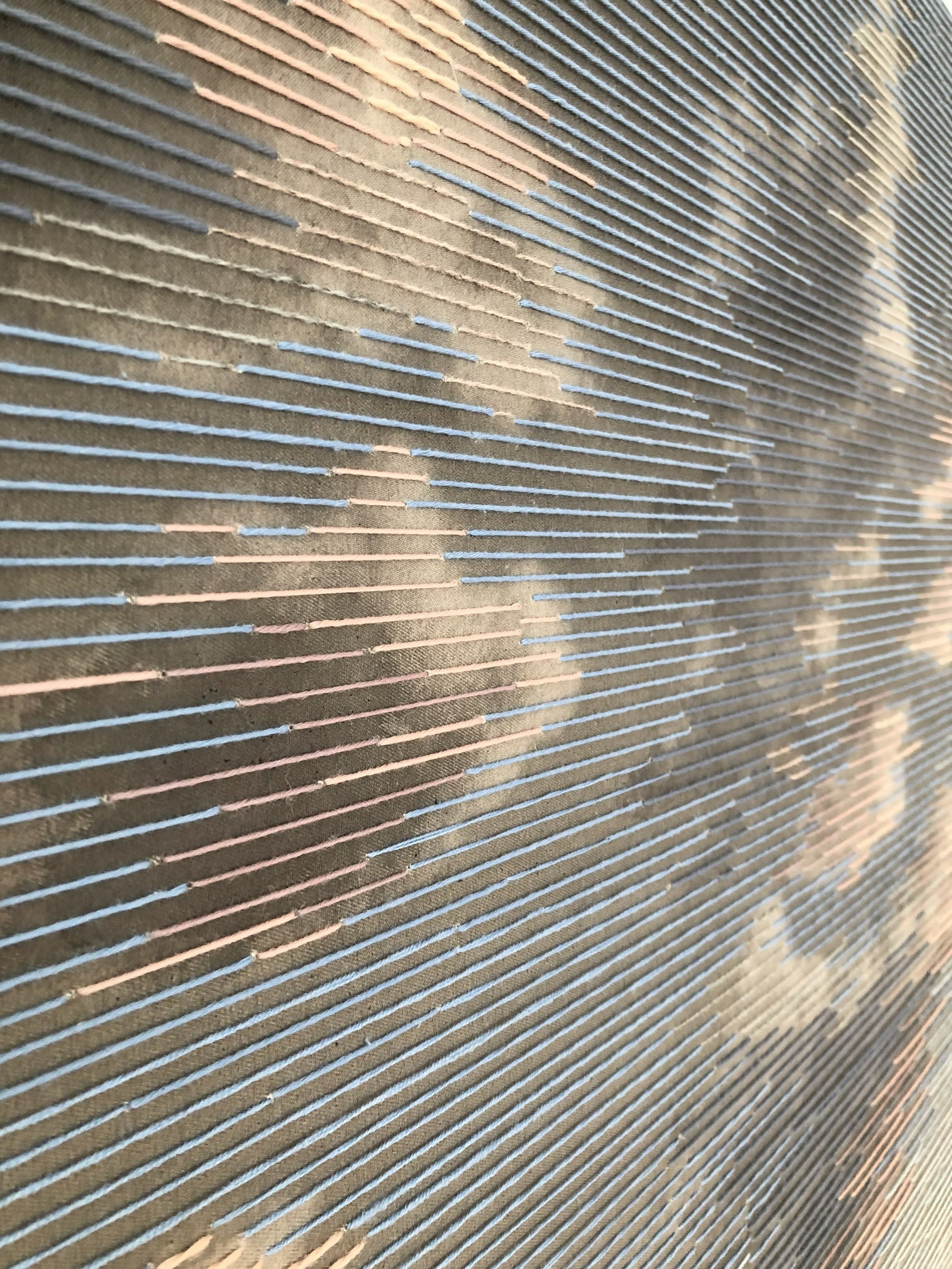
Dorada, ink/yarn on canvas, 125 x 100 cm, 2024
What would you protect at all costs in your practice, even if the market stopped rewarding it?
To a certain extent, I would always incorporate painting into my work. Those are my artistic roots; everything else around that changes, and I’m not set in my ways—I’m sure it will change again.
What do you notice now that you couldn’t notice ten years ago?
I find it amazing how attention for a particular work suddenly seems to generate itself once it has made its way into certain circles. I’m receiving so many international inquiries about my 2023 work “Yucatan II”—more than I could have ever imagined 10 years ago.
Has making art made you more hopeful about people or less?
Meeting the people who respond to my art fills me with hope. There are so many wonderful people who are open to new experiences, who open up through conversation, and who show me that my art has a very powerful positive effect on them—which makes me very grateful.
What’s the question nobody asks you that they should?
Oh, people ask me a lot of questions—I can't complain.
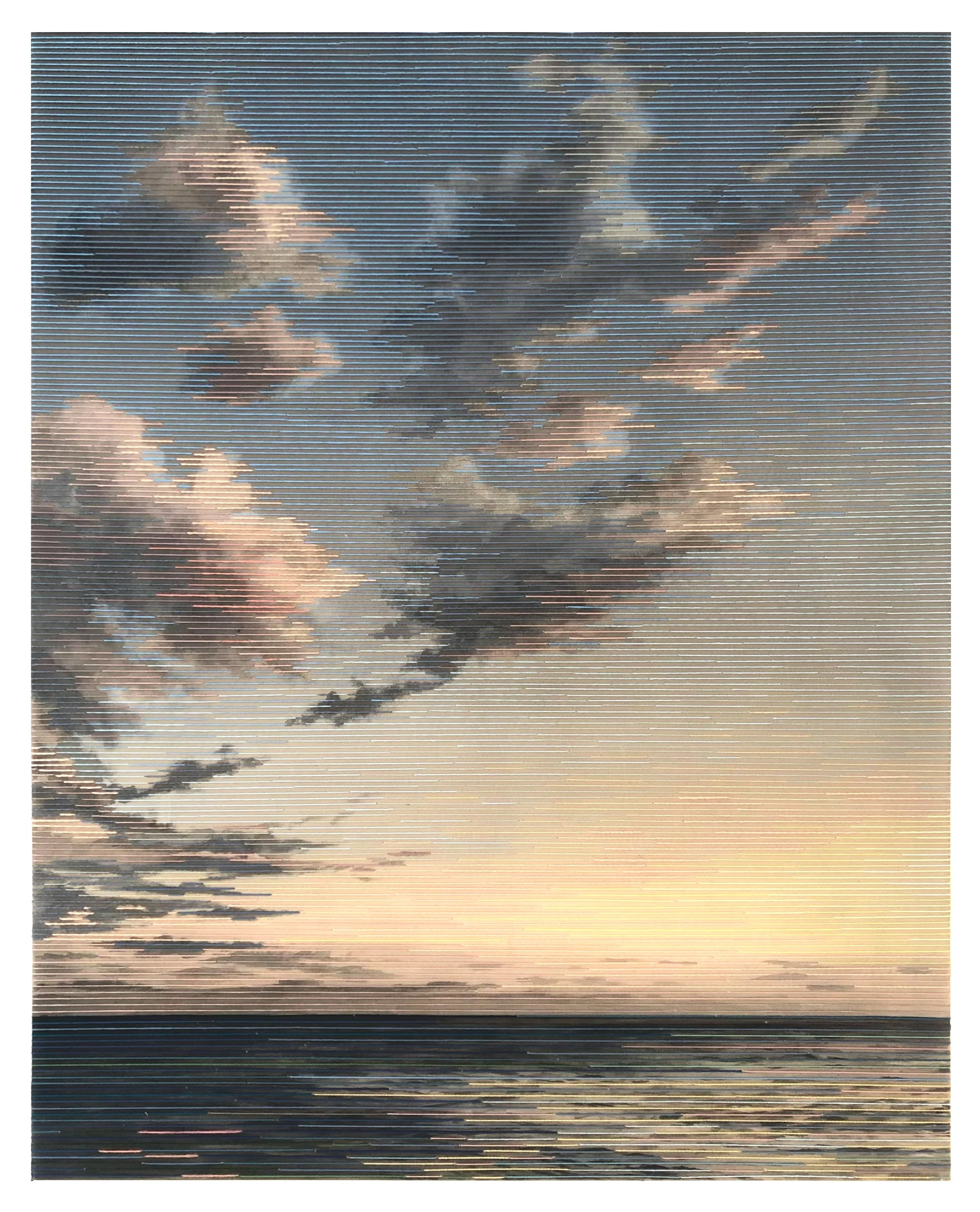
Dorada, ink/yarn on canvas, 125 x 100 cm, 2024
What do you think your work reveals about you unintentionally?
My deep longing for peace, for nature untouched by humans, and for wide-open spaces. And, of course, my work reveals a great deal about my sense of aesthetics, which I incorporate into it unconsciously.
When future viewers encounter your work decades from now, what do you hope survives: the image, the feeling, or the labor?
Surely a combination of all of that!
Who in your domain do you think is genuinely underrated, and why?
I think you could call it the general art scene in my hometown of Nuremberg. There are a lot of amazing artists based here, all of whom are very down-to-earth and modest. In the studio complex, Tillystudios, which I founded with a few colleagues a few years ago, there are over 50 artists, each of whom is amazing in their own right.
What does your work cost you that nobody sees?
Since I love working on my art and it brings me such great satisfaction, it gives me more than it costs me.
All the work that accompanies it—organizing and setting up exhibitions, sourcing materials, and responding to emails and interviews—takes up almost as much of my time as I spend painting and embroidering.
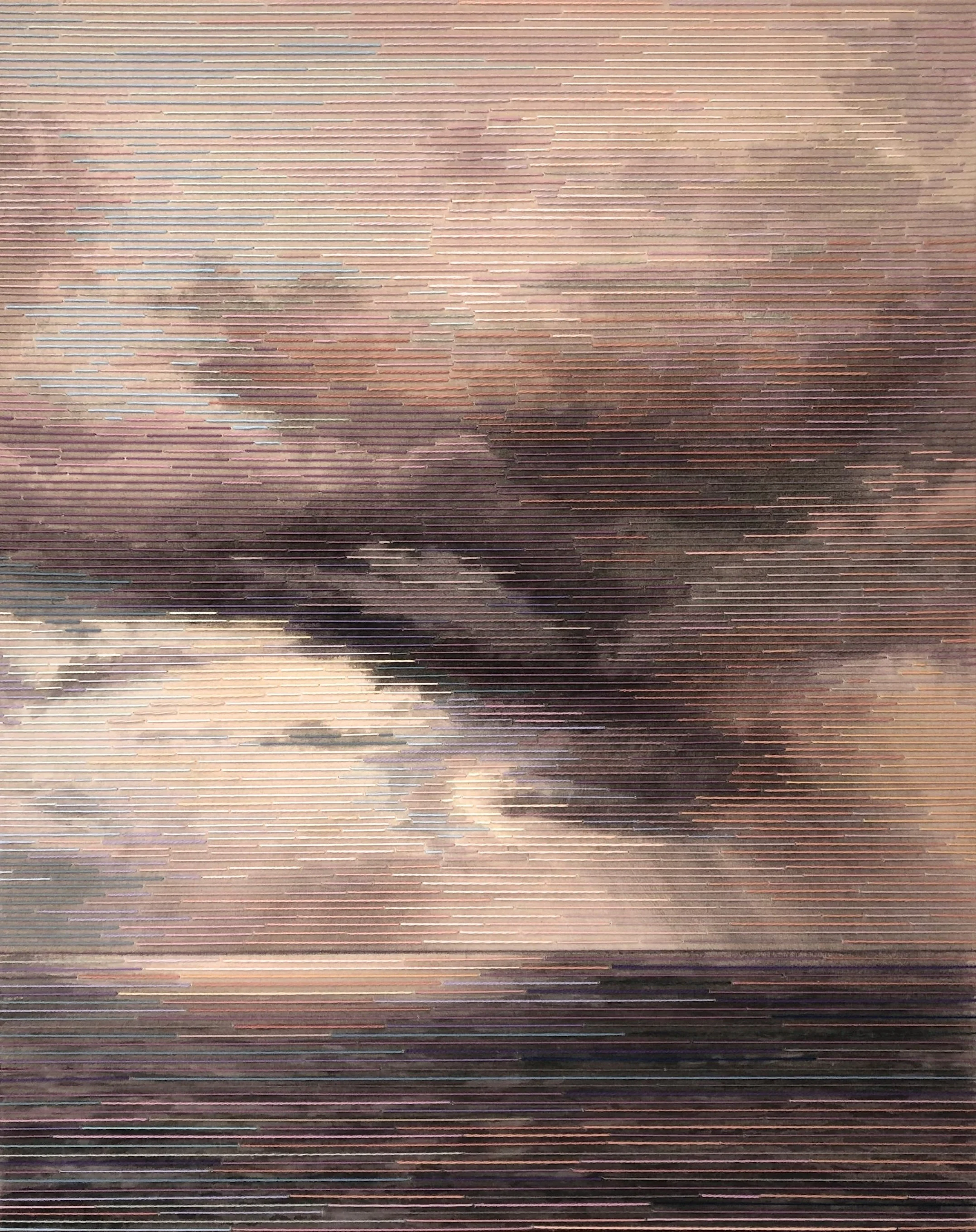
If Terrene's readers remembered only one thing from this conversation, what would you want it to be?
The artist who invented the ink-and-yarn-on-canvas technique.
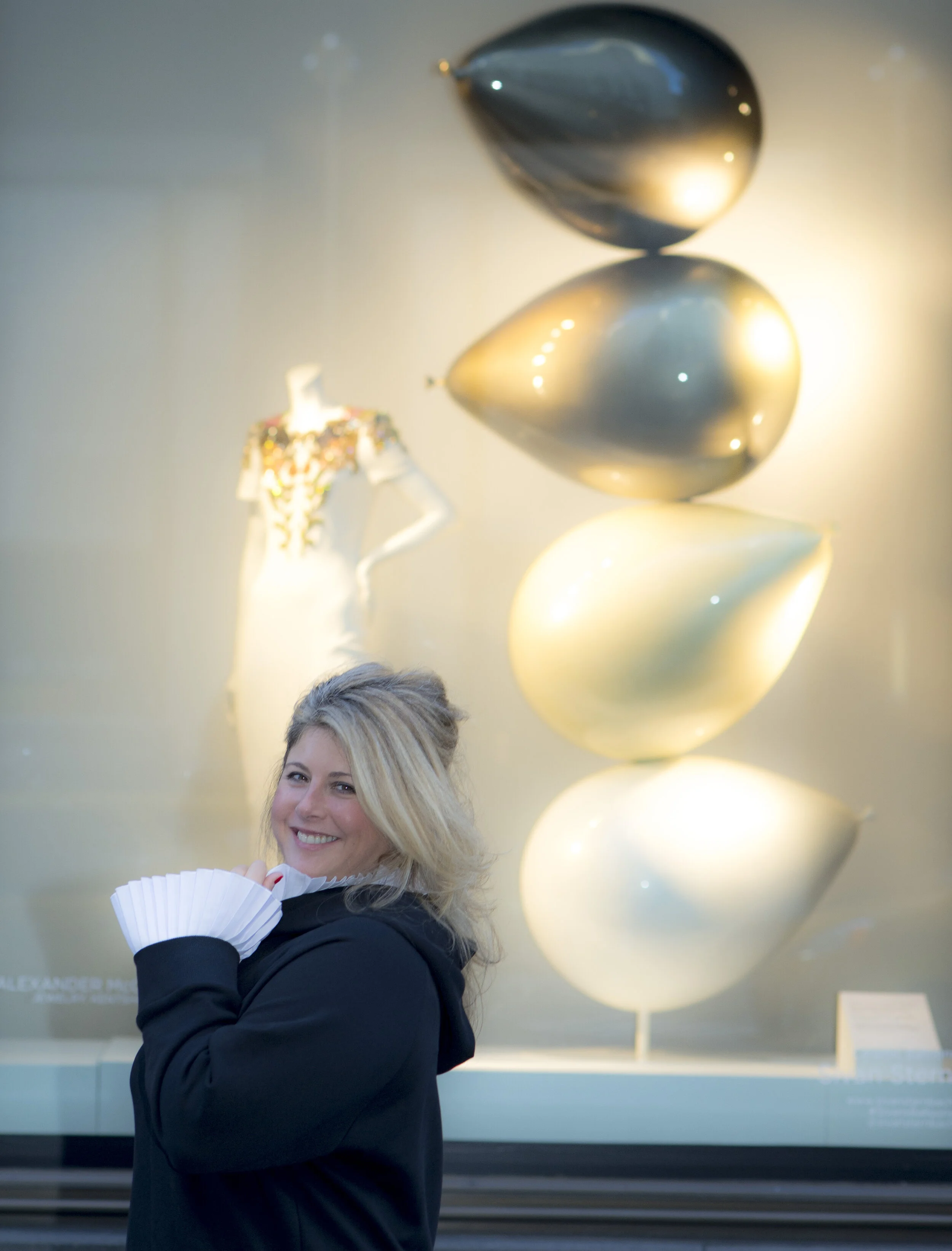
Linda Männel’s portrait by Meike Männel
Srishti Jindal in conversation with Linda Männel